
INDEX
Thursday Gathering" held on Thursday, September 11, 2025, was conducted by our aiESG with Yame City, Fukuoka Prefecture.ESG Assessment of Yamecha TeaThis was an important event to present the At this event, our CEO Seki explained our evaluation methodology and research, and through a panel discussion with expertise from Yame City Mayor Yutaro Minohara, Fukuoka Bank Research Director Tamaki, and Kyushu University Associate Professor and aiESG Chief Researcher Keeley, the local economy The panelists delved deeply into the potential of ESG in local economies.
This report will provide a detailed report of the event.
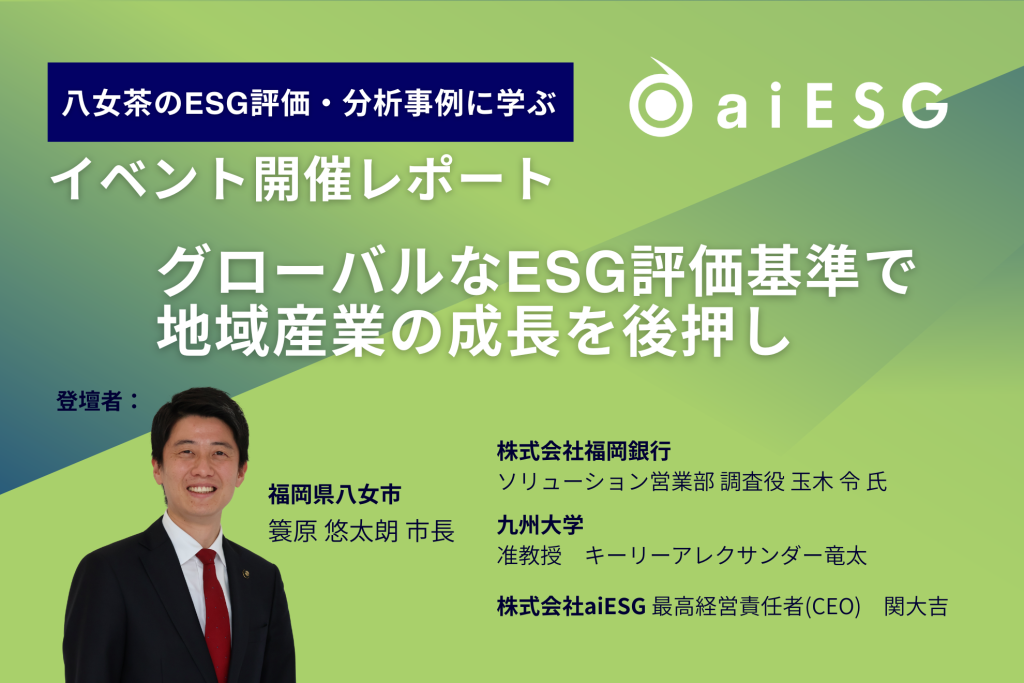
Event Summary
- Event Name: Thursday Gathering
- Date of the event: Thursday, September 11, 2025
- Sponsored by: aiESG Corporation
- Co-sponsorship/Cooperation: CIC/Venture Café, Yame City, Fukuoka Prefecture, Fukuoka Bank
AI assessment to visualize ESG risks throughout the supply chain
At the beginning of the event, Mr. Seki of aiESG gave an overview of our business and the importance of ESG assessments, explaining how not addressing ESG issues can lead to business risks for companies and, ultimately, to a huge loss of sales, and how a U.S. apparel company lost approximately 1.4 trillion yen in sales due to a boycott campaign after NGOs pointed out forced labor and child labor. He also introduced the case of a U.S. apparel company that lost approximately 1.4 trillion yen in sales due to a boycott campaign after NGOs pointed out forced labor and child labor. In addition to environmental issues, social and human rights impacts are directly linked to corporate value.
The Current Status of Yame Tea and Expectations for ESG Evaluation: Looking toward Overseas Expansion of Local Brands
Mr. Yutaro Minohara, Mayor of Yame City, gave an overview of Yame City, introduced Yame Tea, and explained the background of his city's efforts in this ESG evaluation.
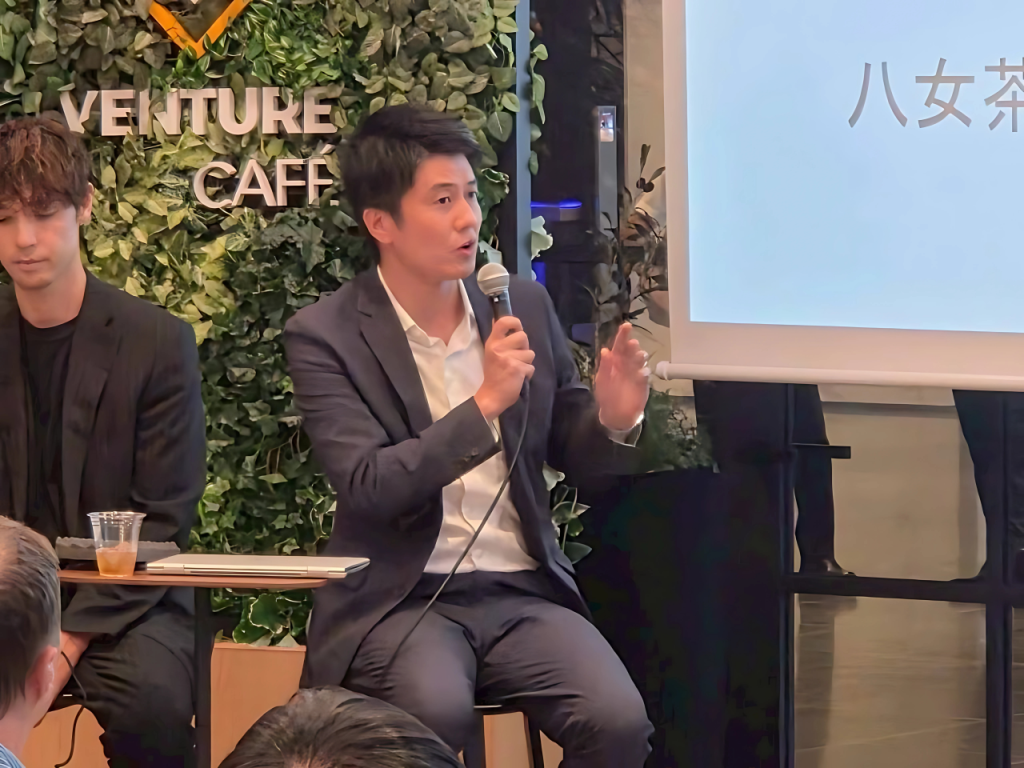
Located in the southeastern part of Fukuoka Prefecture, Yame City is the second largest city in Fukuoka Prefecture with an area of 482.44㎢ and a population of approximately 59,045 (as of July 31, 2025). The main industries are agriculture (tea, chrysanthemums, strawberries, citrus fruits, etc.) and traditional crafts (Buddhist altars, lanterns, etc.). Yame tea in particular is known for its sweet, rich, and umami flavor, and Yame traditional gyokuro originated in Kasahara, Kuroki-cho, Yame City, and has a 600-year history and is called "the highest peak of Japanese tea. It boasts a 25-year track record of winning the top prize in Japan at the National Tea Fair for 25 consecutive years.
However, Yame tea's share of the national market is only 2.21 TP3T, and the challenge is how to maintain and develop its brand value. The Japanese tea industry as a whole has reached a turning point, with the number of producers decreasing by approximately 301 TP3T and the cultivated area by 31 TP3T over the past five years. The situation is particularly serious with the number of producers of traditional Hon Gyokuro, which is labor intensive and costly, decreasing by approximately 421 TP3T and the cultivated area by approximately 391 TP3T. On the other hand, the international popularity of matcha has been rapidly increasing, and in the past 10 years, tea exports have increased 2.5-fold, reaching a record high of 36.4 billion yen in fiscal 2024. This matcha boom has also been a factor in the shift to matcha production by Japanese tea growers.
Mayor Minohara stated that overseas expansion is essential to increase the value of local resources in a shrinking domestic market. He said that the matcha boom is a tailwind, but in order to establish Yame tea as a high-end tea overseas, he focused on ESG evaluation as an element of differentiation, not just quality.
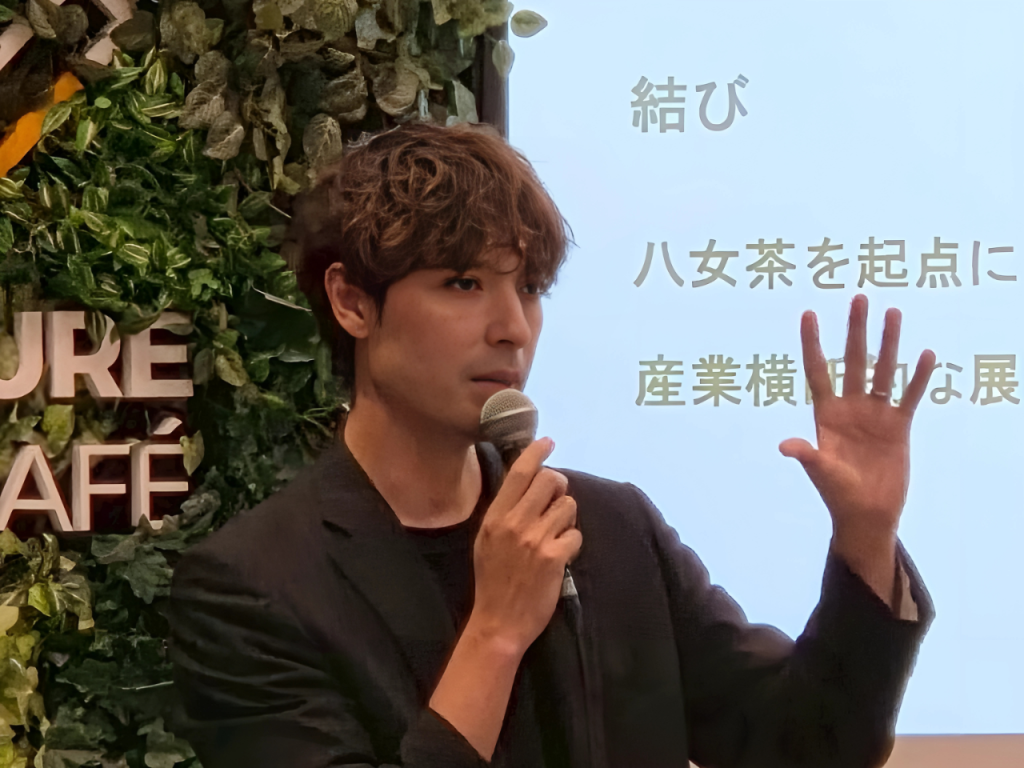
Associate Professor Keeley of Kyushu University (aiESG Chief Researcher) explained the necessity of ESG assessment and our assessment methodology. He pointed out that human rights abuses such as forced labor and child labor hidden in today's supply chains pose a risk of having an enormous impact on corporate value. ESG assessment is a key element to ensure that high value-added products are accepted in overseas markets. ESG assessments are an important factor in gaining acceptance of high value-added products in overseas markets, and are directly related to marketing and brand building.
Results of ESG evaluation of Yamecha by aiESG: Strengths and challenges indicated by quantitative data
Next, Mr. Ichii, Manager of the Analysis and Insights Department of aiESG, who was involved in the evaluation and analysis of Yame tea, reported the results of the ESG risk comparison between Yame tea and Chinese tea.
- Overall Advantages: Compared to Chinese sencha, Yamecha tea has a higher supply chain efficiency than Chinese sencha.Low environmental impact in terms of greenhouse gas (GHG) emissions, air pollutants, and water usageThe results of the survey confirmed that Also,Low risk of low-wage work, overwork, and work-related injuries, plus smallholder farmersSocial risks were also found to be controlled, such as the following, suggesting that producers' business activities, working conditions, and environment are adequately protected.
- More on human rights risks: While the risks of low-wage labor and overwork are significant in Chinese sencha, especially at the production site level, these risks were hardly observed in Yame sencha production sites. Regarding the small farmer management risk, while in China there is concern that the survival of small farmers may be threatened by large-scale production, in Yame Sencha, the production entities are dispersed to each farmer,Traditional cultivation methods are ensured to be carried on.The points mentioned were the major differences.
- Yame Traditional Hon Gyokuro Issue: Yame Traditional Hon Gyokuro was evaluated as a major advantage due to its low ESG risk, although it is more than three times more disadvantageous than Chinese Gyokuro in terms of cost.
- On the other hand,Air pollutant emissions (NOx, SO2)was revealed, suggesting that combustion origins in upstream fertilizer and material production, dependence on thermal power for domestic electricity, and logistics are contributing in a combined manner. Yame Traditional Gyokuro, which is a traditional method with a high manufacturing process and cost, uses a cultivation method that structurally uses a lot of fertilizer, and requires measures that take into account the entire supply chain (e.g., low NOx emissions, optimization of procurement sources).
ESG Evaluation Paves the Way for the Future of the Yame Brand: A Path to Revitalization of the Local Economy
Based on the results of the analysis, Keeley proposed the following three main measures that Yame City should take in the future.
- Support for the introduction of labor-saving technologies: By mechanizing labor-intensive processes and developing cooperative work systems, we help reduce the burden on producers and build a sustainable production system.
- Efficient use of materials: By promoting the joint purchase and use of materials in cultivation and packaging, we will simultaneously achieve cost reduction and standardization of quality.
- Efficiency in distribution and sales: The program promotes the development of new markets by reducing costs through a joint shipping system and logistics assistance, and by supporting the development of logistics and sales networks, especially with an eye to overseas expansion, by the local government.
These measures are not primarily aimed at "strengthening cost competitiveness,Underpinning the high added value of Yamecha tea to support its intrinsic value of quality and brand maintenanceHe emphasized that it should be viewed as a
Furthermore, a proposal was made for a strategy to establish a "Yame brand" that, starting from the credibility of Yame tea, leverages the "halo effect" to enhance the brand value of Yame's other local products (agricultural products, processed products, alcoholic beverages, etc.), tourism, crafts, and other products of the region as a whole.
What is important is "concrete story" and "persuasiveness

Mr. Rei Tamaki of Fukuoka Bank pointed out that while ESG is an effective means of revitalizing local industries, it is difficult to differentiate a product from others simply by promoting it as "good for the environment" and that it tends to become a commodity. He stated that it is important to tell a concrete story about the production process, the people involved, and the commitment to the region, and that the numerical values obtained from the analysis should add persuasiveness to the story.
Sustainability initiatives used to be considered only for large companies, but now there is a growing trend that requires ESG initiatives throughout the supply chain. Small and medium-sized local companies, which are many of Fukuoka Bank's customers, are also expected to face increasing demands for initiatives from their suppliers as part of their supply chains. Therefore, he said he would like to go beyond the framework of finance and consider providing consulting-like support, such as by providing an approach that is easy to start, indicating priorities, and communicating specific methods.
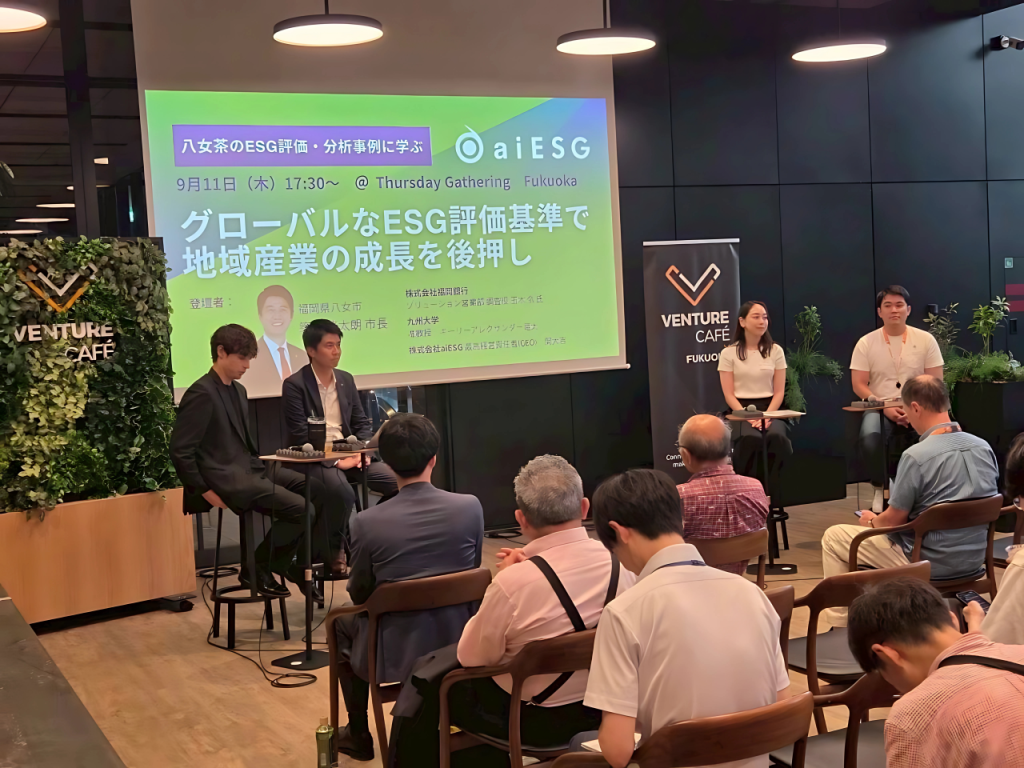
From aiESG's Seki mentioned that young and overseas talented people are highly interested in global frameworks and sustainability, and that ESG initiatives can be a trigger for even small and medium-sized companies to be chosen, as he felt the enthusiasm of students during the recruitment activities he recently participated in.
ESG assessment is a means, not an end
Mayor Minohara emphasized that the results of the ESG analysis and assessment of Yamecha tea and the fact that the assessment was conducted itself will lead to significant added value for Yamecha. On the other hand, ESG assessment is only a "means" and not an "end. Ultimately, he said, it is about producers making a profit and building a stable business situation for the tea industry as a whole.
In addition, it is very important to have a strategy on how to make the "value" obtained from the ESG evaluation known to consumers, both in Japan and overseas, and ultimately to pass it on to the price. In addition to the development of the Yame tea brand, he also emphasized the importance of considering how to enhance the brand power by taking advantage of ESG and other factors, including specialty products other than tea, in order to expand the name "Yame.
Maximizing the value of local resources through ESG assessment for a sustainable future
At this event, through aiESG's ESG assessment, Yame teaQuantified environmental and social advantages are important differentiators for competitiveness in foreign marketsThe results of the survey clarified the issues that need to be addressed in the supply chain. At the same time, issues in the supply chain were also highlighted, and concrete directions for future improvement were found.
Those who participated in the tasting of Yamecha tea served at the event said, "It has a strong umami taste and a pleasant aftertaste," while others said that knowing the results of the ESG evaluation helped them to better understand that "the production process that we are particular about is what leads to this delicious taste.
It was concluded that ESG evaluation is only a means to an end, and that the ultimate goal is for producers to be able to sustainably profit and operate their businesses profitably, and that brand development, disclosure strategies, and the efficiency of the disclosure process are essential to achieve this. aiESG will provide quantitative evaluation data to help build a credible brand story and contribute to corporate growth and the revitalization of the local economy. By providing quantitative evaluation data, aiESG will support the construction of highly credible brand stories and contribute to corporate growth and the revitalization of local economies.
If you are interested in aiESG's services, please feel free to contact us.
https://aiesg.co.jp/contact/